Reducing errors and manual work with role-based access, bulk actions, and reporting
Payment Manager is a web application for managing provider payments and contracts. I led the design of key features: role-based access, notifications, payment linking, and bulk workflows, enabling finance and analyst teams to reduce errors, save time, and scale access to new users.
Team
PM, Engineers, QA
My role
Research, Design (sole designer)
Year
2023-2024

Role & collaboration
I was the sole designer on a team with a PM, two engineers, and QA. Each feature began with a 3-hour discovery workshop where we defined scope, prioritized functionality, and discussed tradeoffs. I brought initial flows and IA proposals, which we refined collaboratively. Regular team demos allowed us to validate prototypes, address technical constraints, and make informed design decisions that balanced usability with development effort.
Problem
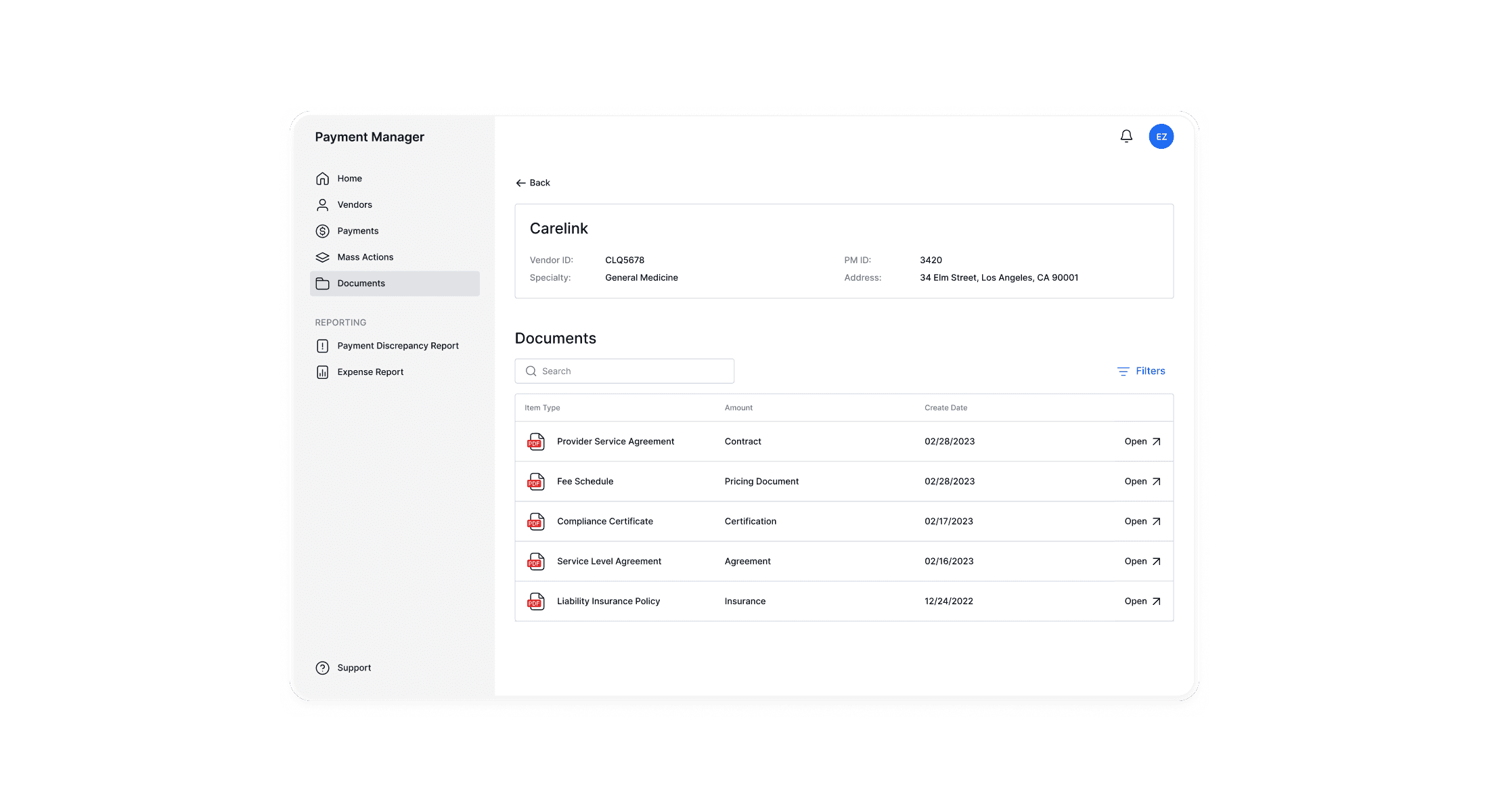
The system had only one user role, shared by people from different departments with varied responsibilities. Contracts had to be added one by one, even when most of the data was identical except for a few details. There was no way to verify whether payment data entered into the system was accurate, creating a critical business risk. Additionally, provider documents were stored in a separate application, forcing users to switch systems just to view files.

Solution
Originally, all users shared a single role, which didn’t reflect their responsibilities. I designed a system of team-based roles, letting departments edit only the data relevant to them. This reduced risk of accidental changes and allowed new user groups, like analysts and department staff, to start using the app without affecting existing workflows.
Finance staff previously entered payments in two systems, creating errors and extra work. I designed a workflow to link payments from the primary finance system to contracts in Payment Manager. Users can now map multiple payments, improving accuracy and reducing repetitive tasks.
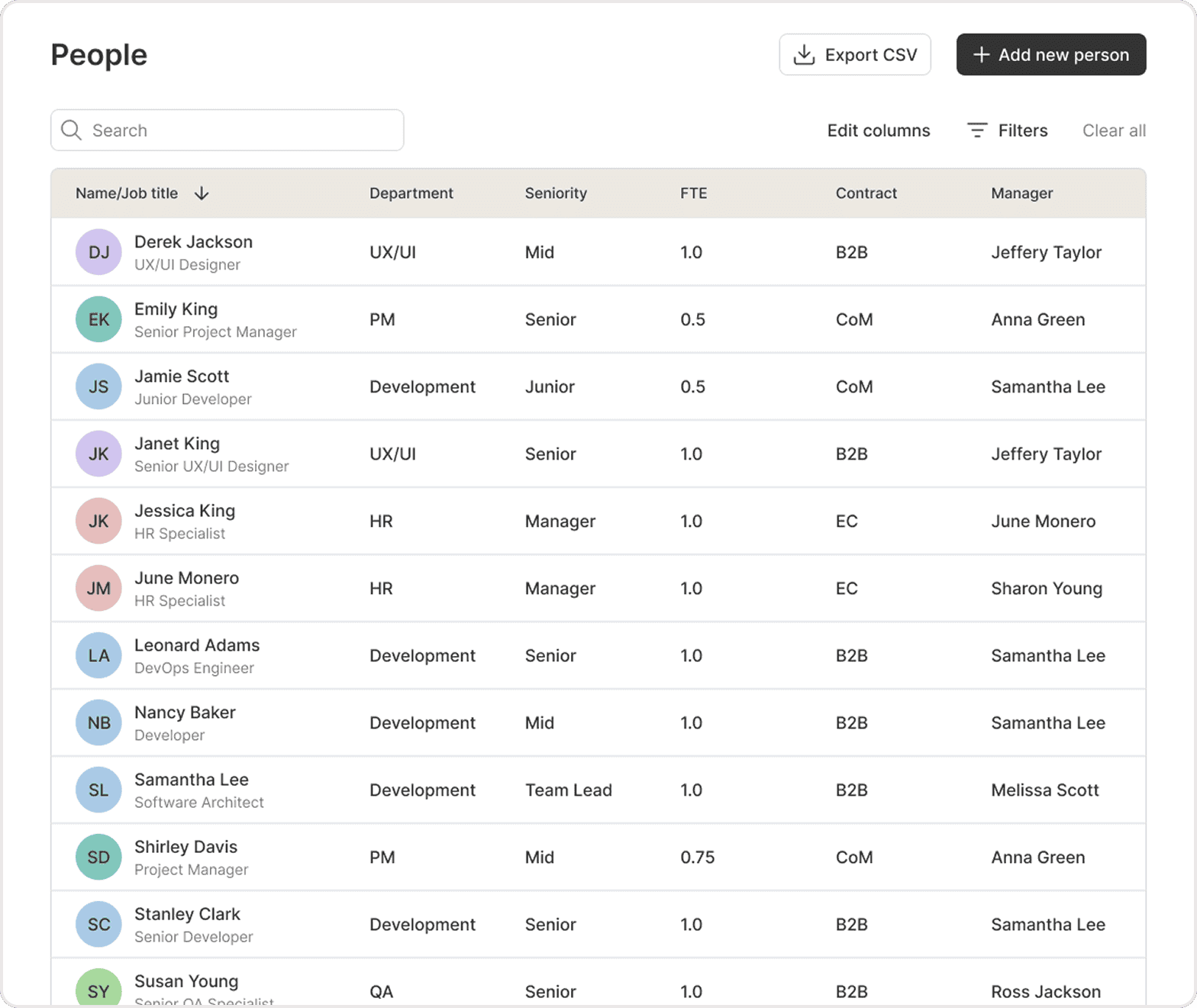
Adding contracts one by one was slow and error-prone. I designed bulk add/edit workflows, including search and filters, allowing users to create or update many contracts simultaneously. This feature cut repetitive work and made large-scale contract updates manageable without adding complexity for the user.
To support day-to-day work, we introduced notifications that surface payments and records requiring attention, helping teams stay aware of pending actions without manual tracking.

Results
Bulk workflows reduced contract management time, role-based access enabled two additional user groups to use the app, and notifications improved awareness of pending work. Payment linking eliminated duplicate data entry. Stakeholders reported high satisfaction, and the success of this project led to the development of additional features.