Reducing the time managers spend on reporting and partner support
In our company, managers spend a lot of time reporting to partners who bring in leads and manually adding those leads into our system. To make this process more efficient, we decided to build a solution that allows partners to add their own leads, track the status of these leads in real-time, and access analytics. For our managers, the system will provide an overview of partner performance, making it easier to monitor results.
My role was to design an end-to-end, multi-sided lead management system, from research and problem framing to delivery.
Team
Product Owner, Engineers
My role
Research, Design (sole designer)
Year
2022
Opportunity
We noticed a pattern in how our lead generation program actually worked day to day. External partners were responsible for finding potential clients and sending us leads. Managers then processed those leads and moved them into sales. On paper, the process was simple. In reality, it was slow and manual.
We saw an opportunity to turn lead management from a manual, trust-based process into a transparent, automated system, one that works equally well for partners and managers.
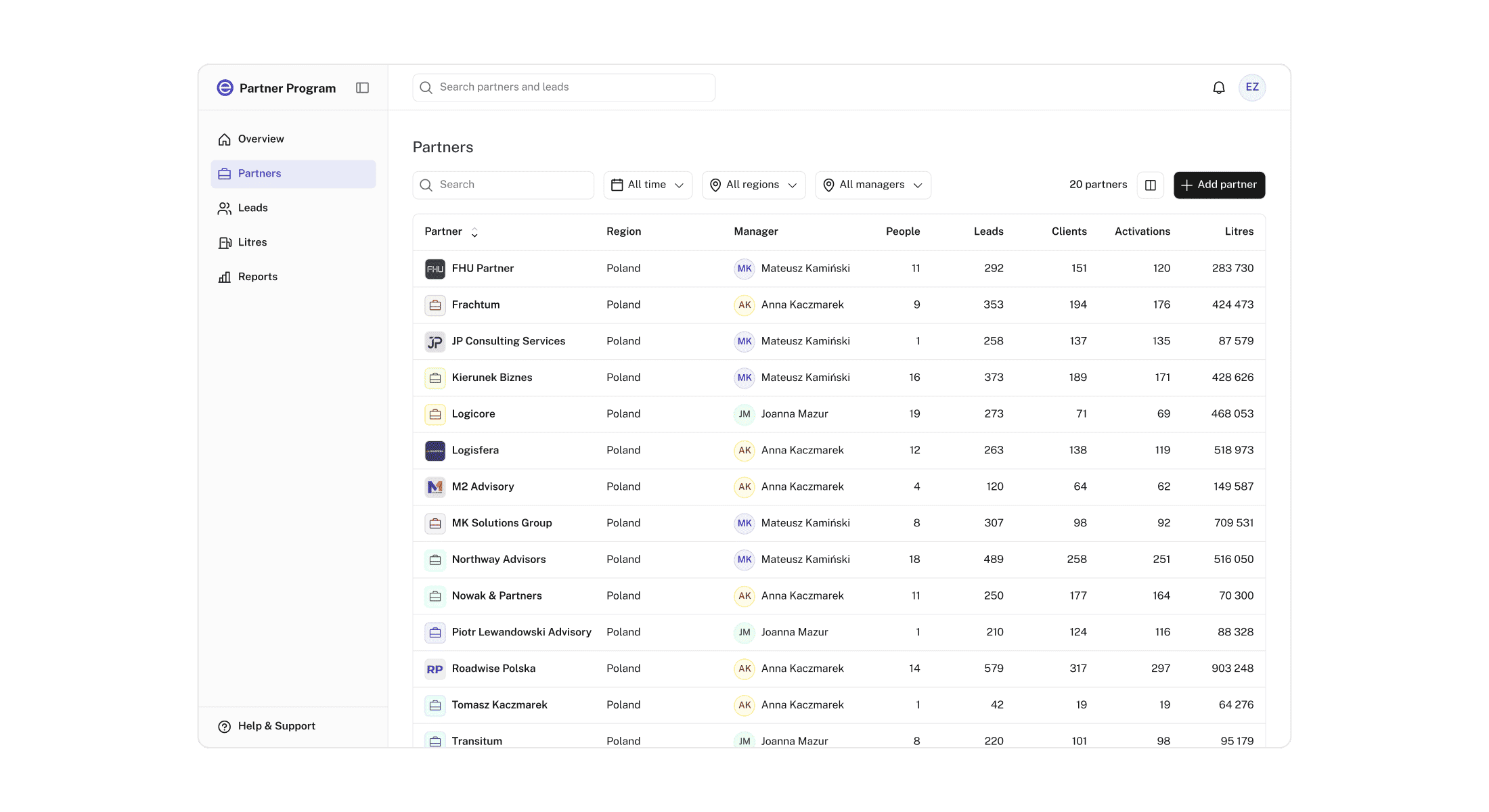
Understanding the real system
We started with interviews and performed two rounds to clearly define the problem and needs. Because users were internal or closely connected to the company, interviews gave us direct access to real workflows. One of the developers joined these sessions to clarify technical constraints early.
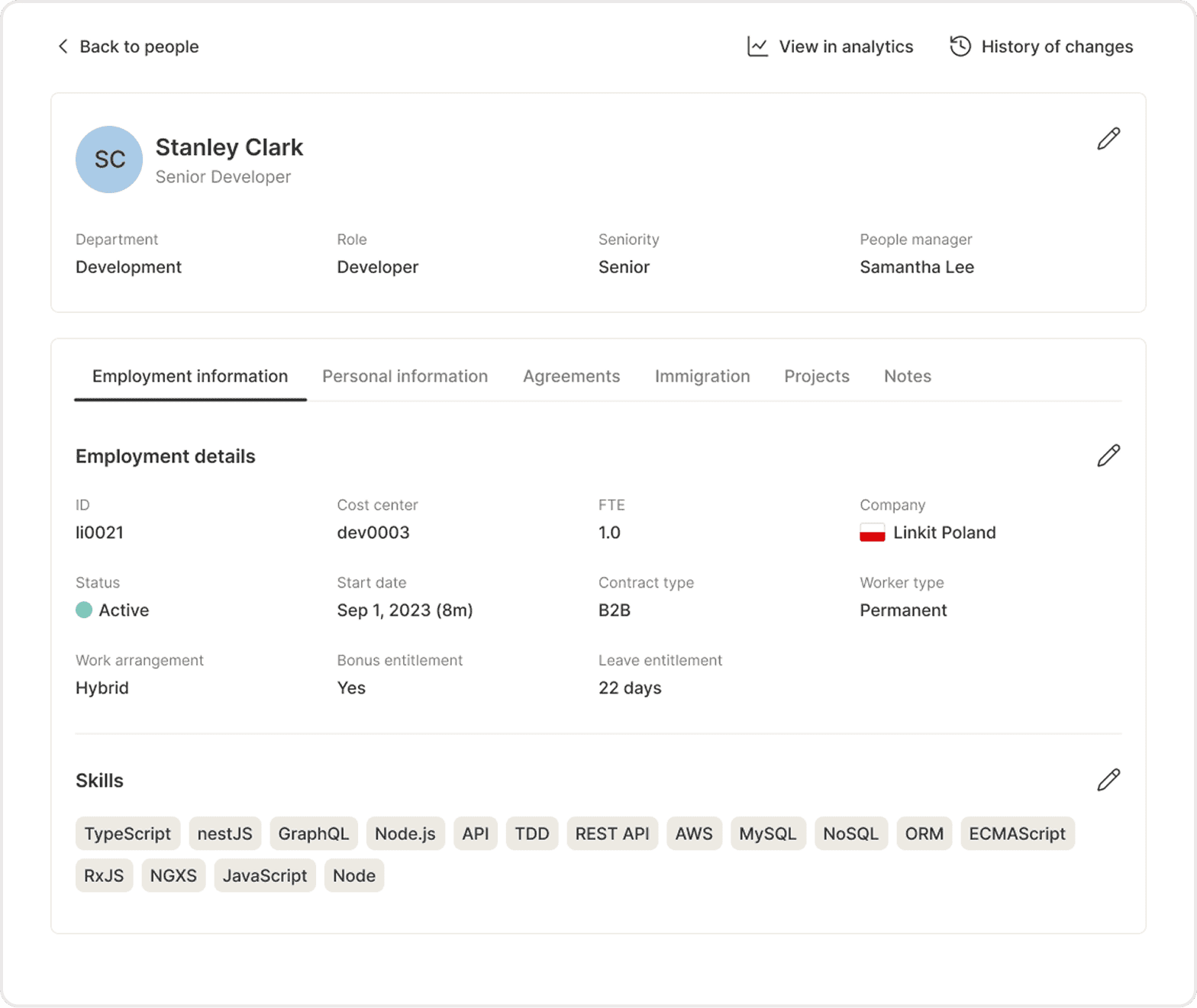
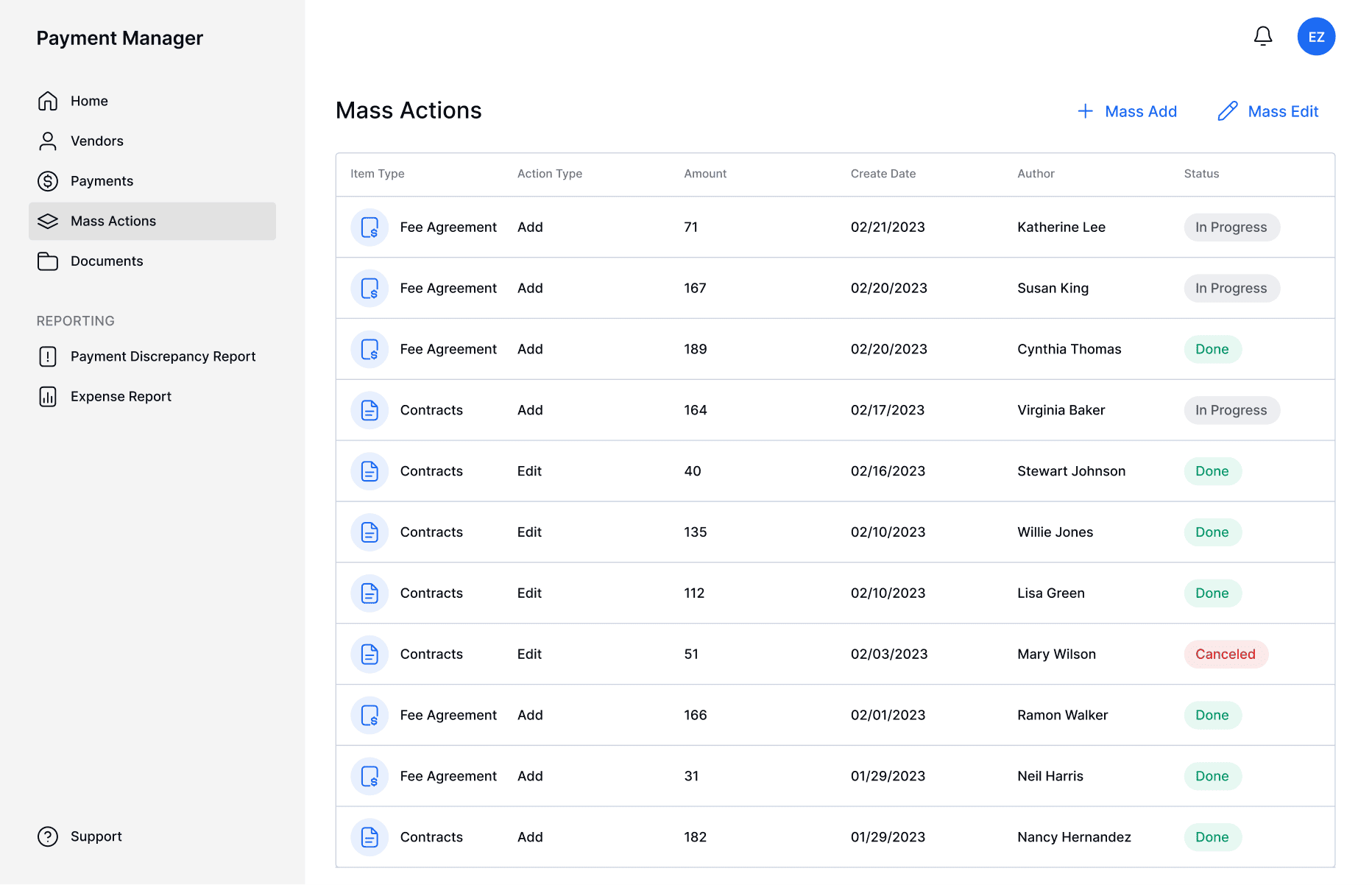
What became clear very quickly was that this wasn’t a simple “manager vs. partner” setup. There were three types of managers, each responsible for different data scopes, and two types of partners, with different payment and reporting models.
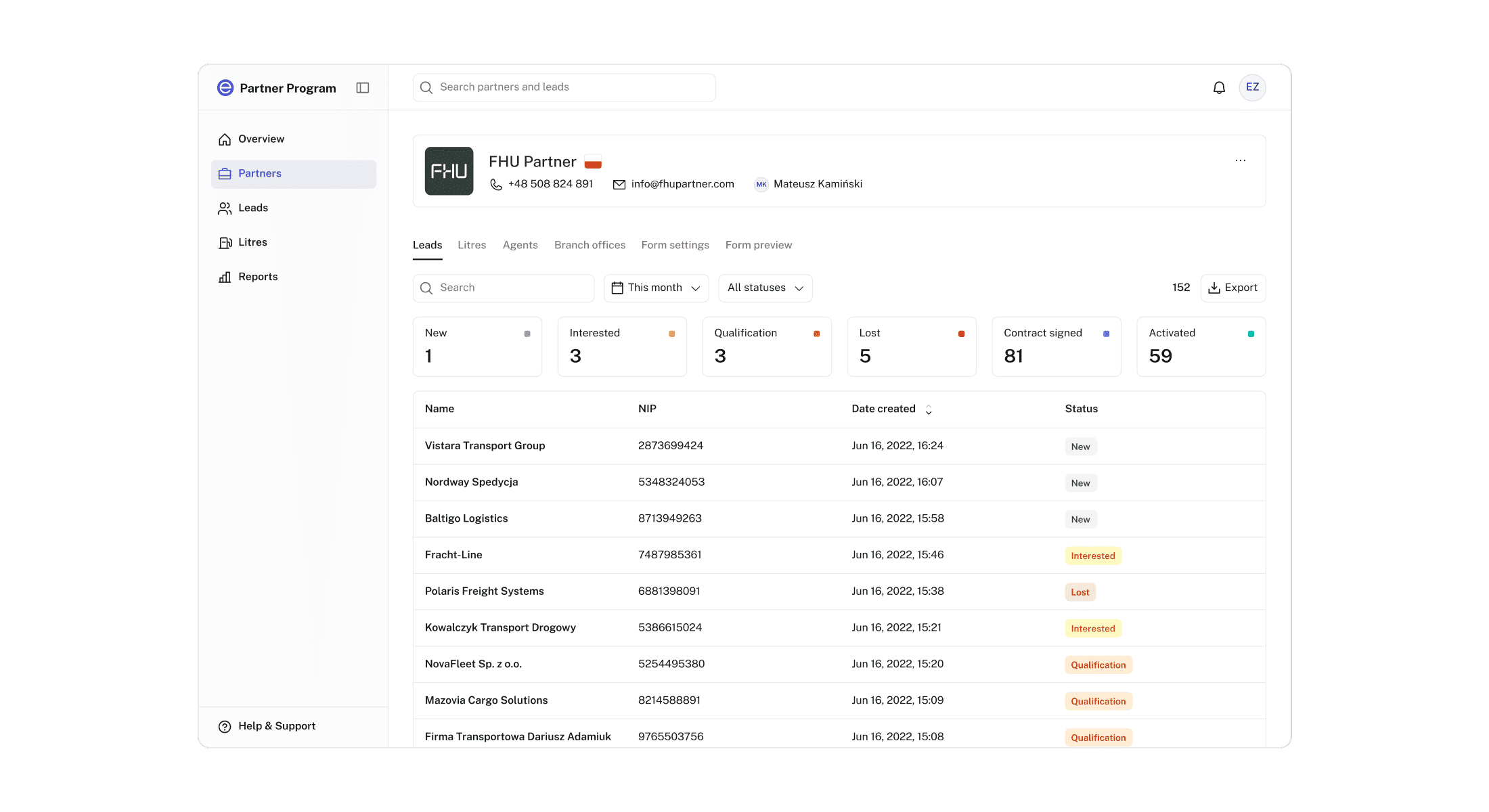
Making complex data work on small screens
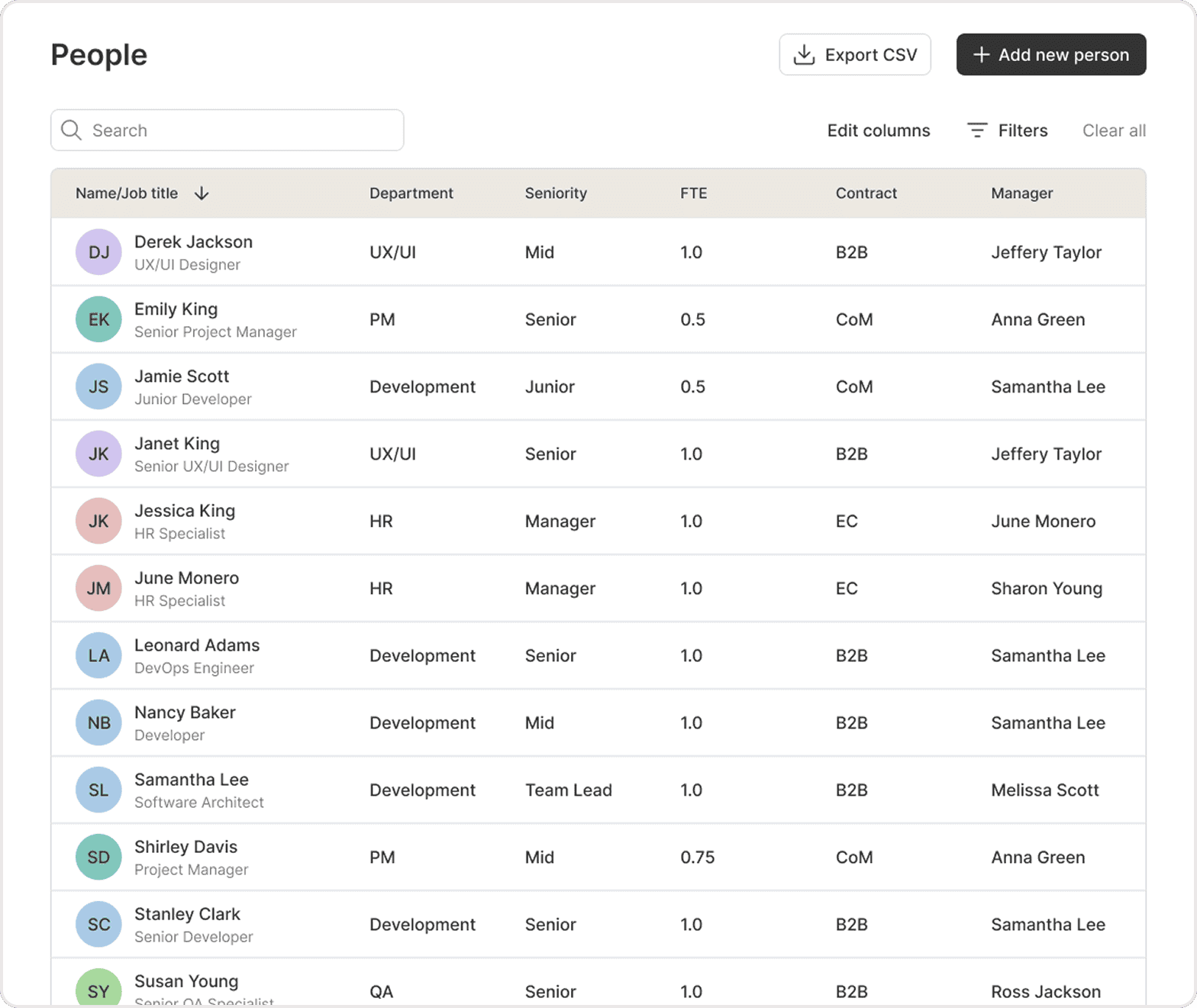
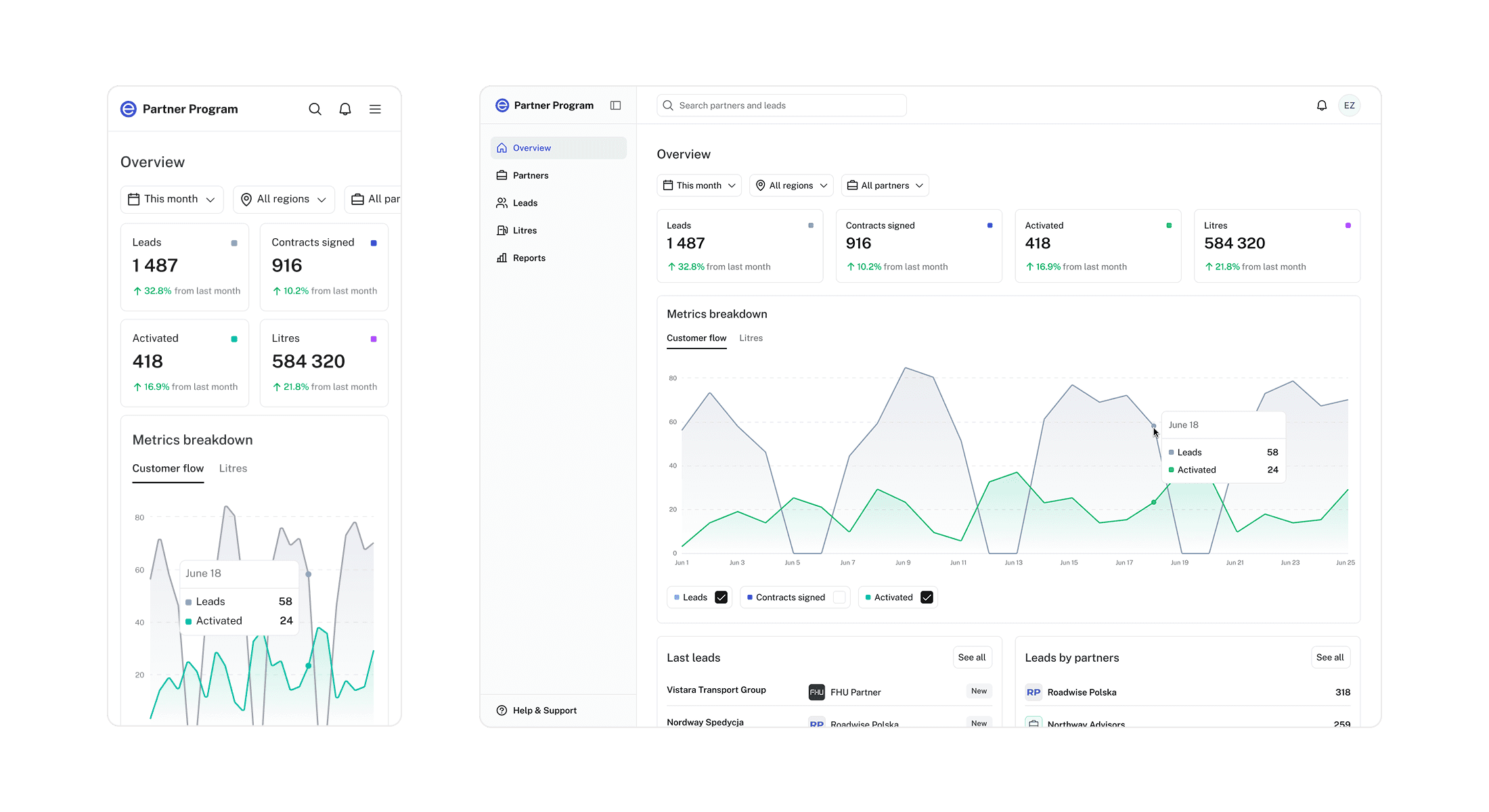
Another assumption we validated early was that both partners and managers work on the go. This was confirmed during interviews and directly influenced layout decisions from the start. Designing complex tables, dashboards, and analytics to remain clear and usable on small screens became one of the core challenges of the project.
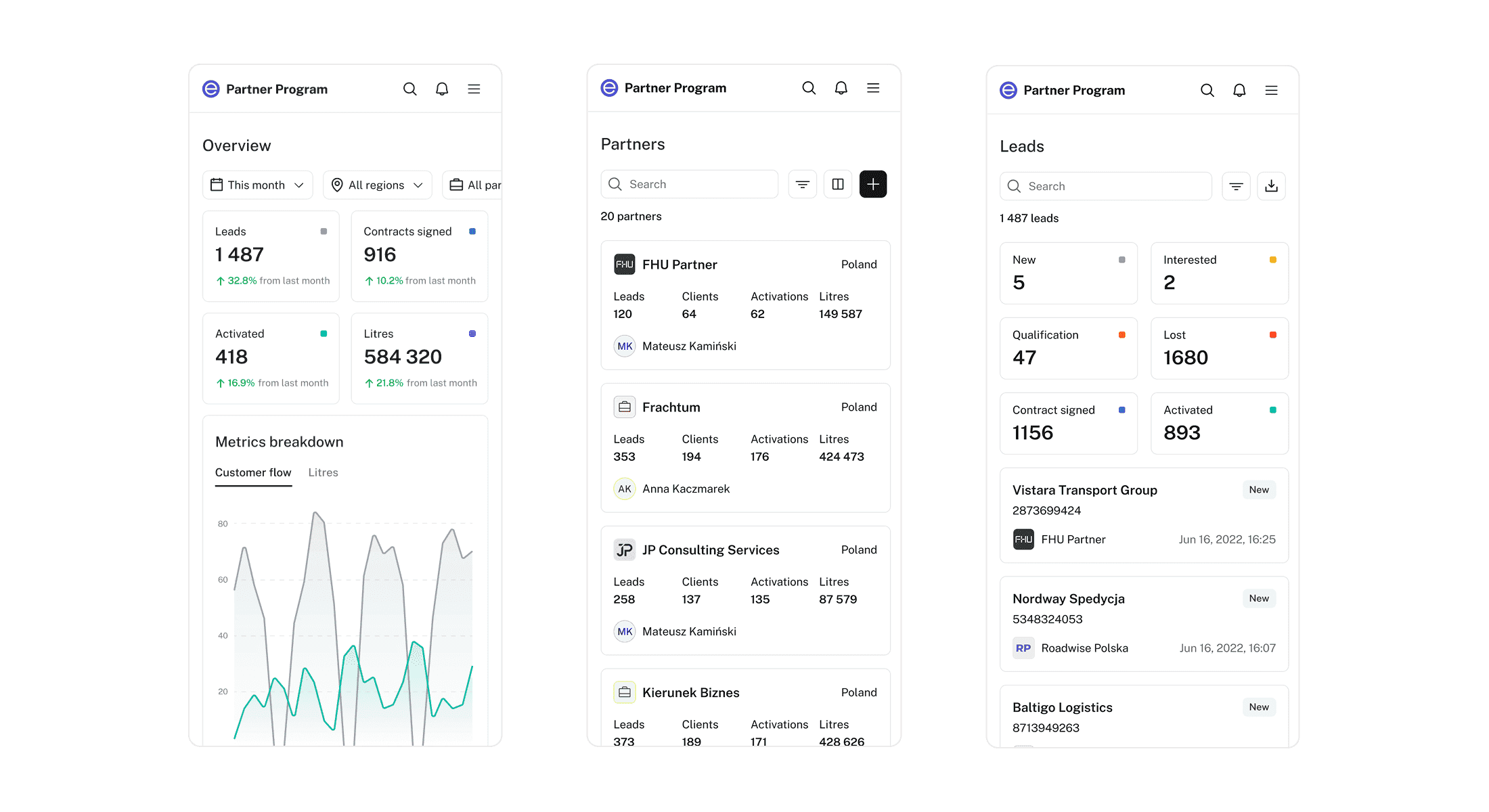
One system, role-based experiences
Each user sees only the data relevant to their role and responsibilities.
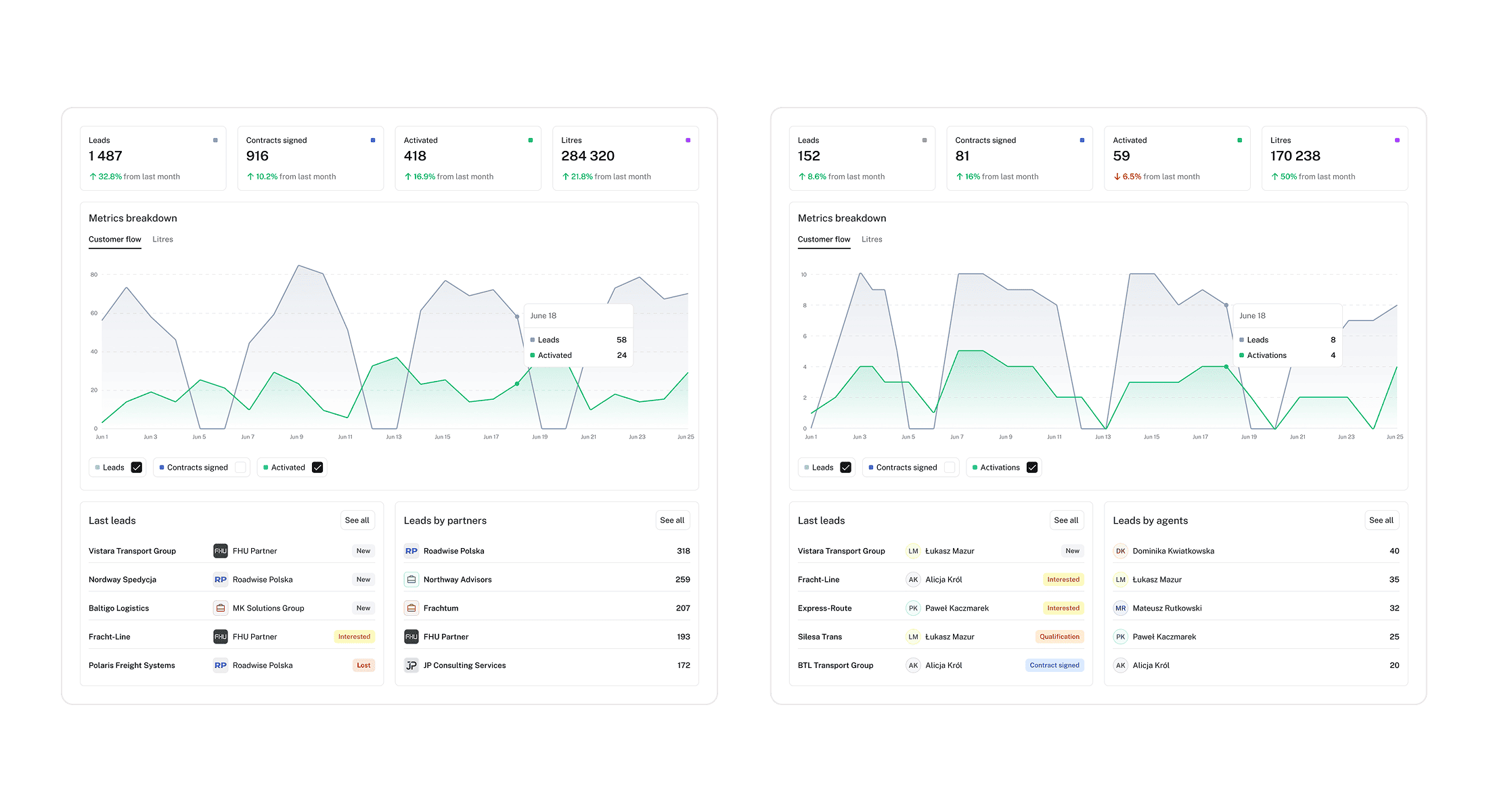
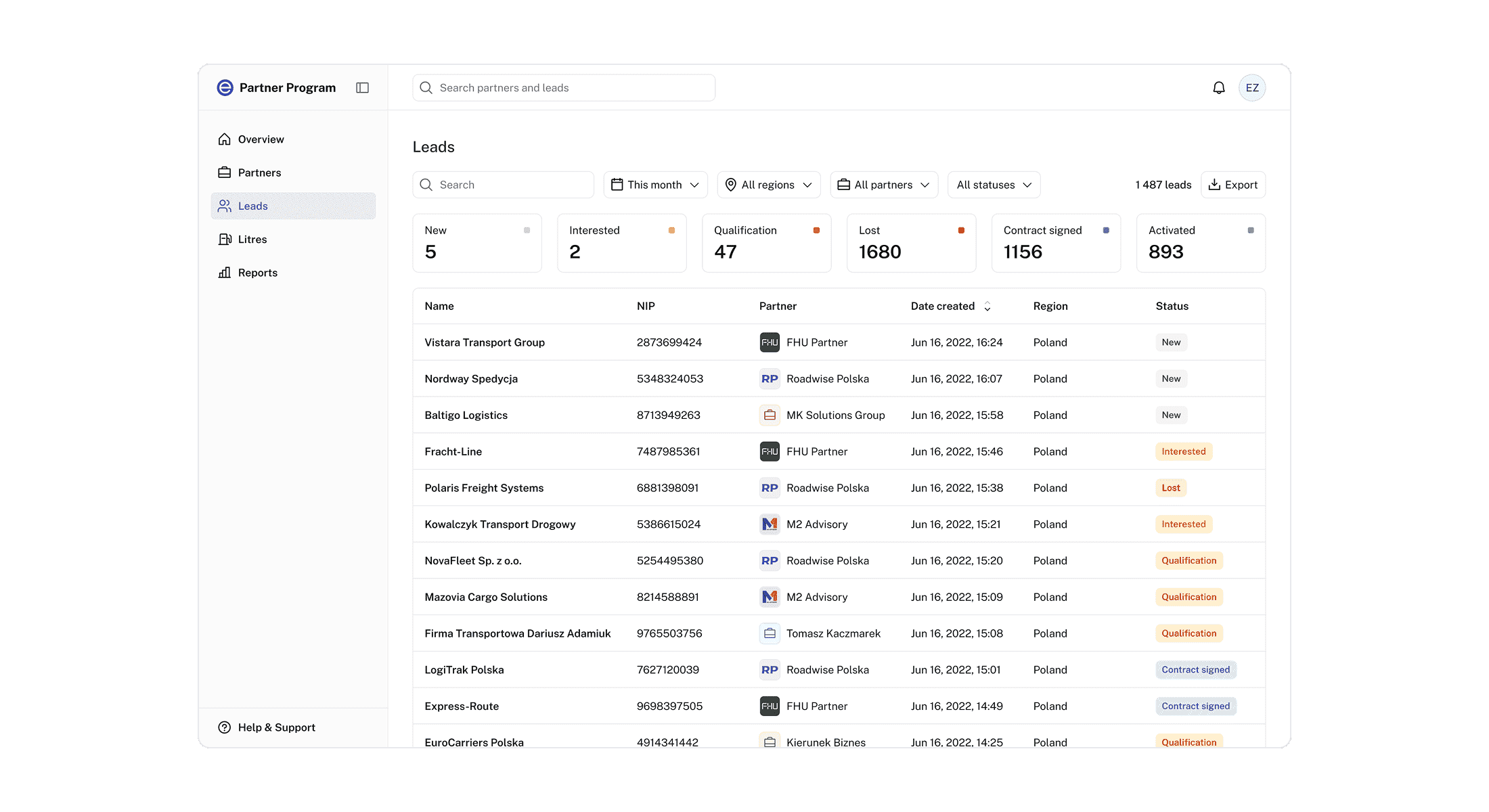
Partners can see immediately if their lead was approved, rejected, or is in progress. This transparency reduces uncertainty and stops the constant phone calls asking for updates.
Managers get visual analytics showing which partners are performing well and trends over time.
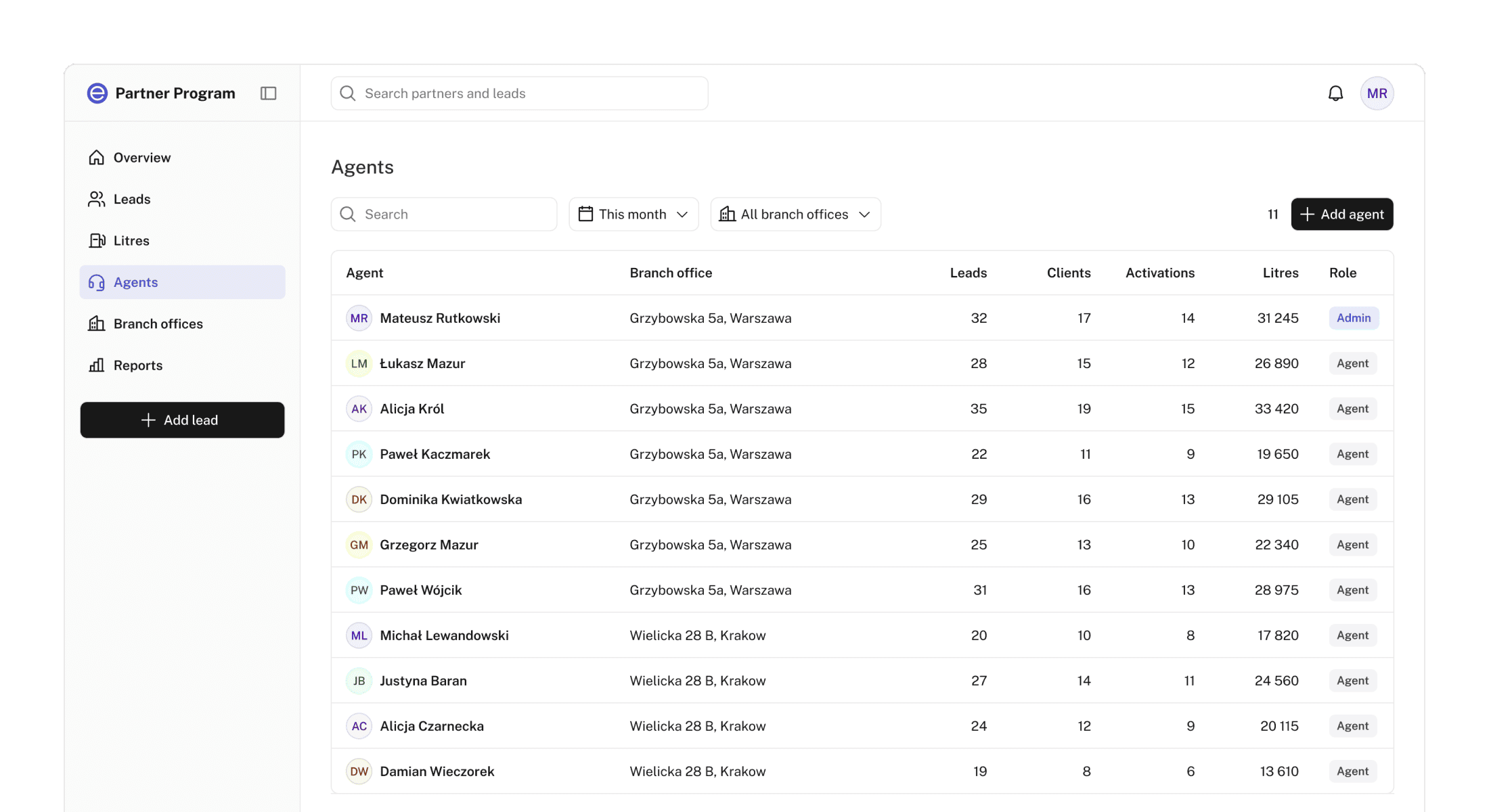
Large partners can manage their agents and see analytics for each agent.
Collaboration and validation
I worked closely with the product owner to prioritize features, with developers to align early on feasibility and integrations, and with sales leadership to validate the final solution before development. We also held weekly presentations with key stakeholders to review progress and gather feedback.
Optimizing for early value
During discovery, I identified several opportunities to further optimize the partner workflow. Some of these, such as live earnings calculations for partners, were intentionally deferred. Because partner compensation models differed, defining a reliable earnings logic would require more time than the initial iteration allowed. Instead, we prioritized features that clearly demonstrated value to leadership. Additional ideas were documented in a backlog for future iterations.
Result
The product enabled partner self-service and real-time lead visibility, reducing manual lead entry and partner status reporting for managers.